Search
Search
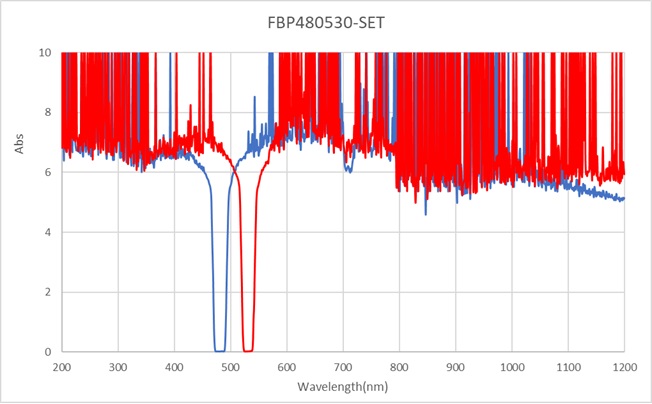
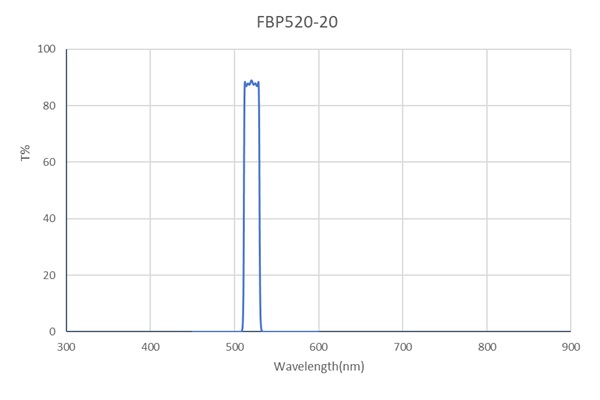
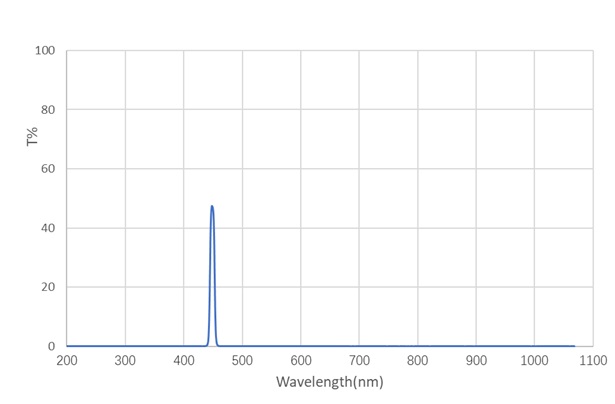
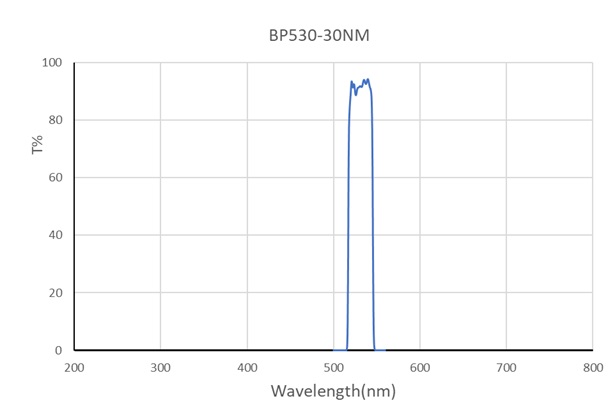
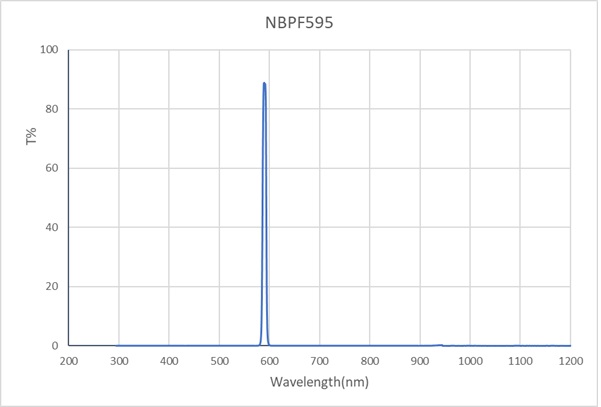
Spectral analysis bandpass filters are core optical components for accurately extracting target characteristic spectral lines and suppressing background and stray light. They are widely used in fluorescence, Raman, infrared, atomic spectroscopy, and other scenarios, directly determining the detection signal-to-noise ratio and accuracy.
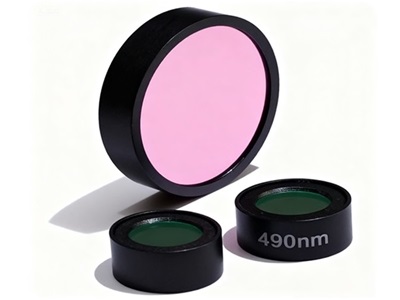
Dielectric thin-film bandpass filters are usually based on the Fabry-Perot (FP) interferometer cavity principle and are formed by alternately stacking high refractive index (H) and low refractive index (L) dielectric films to create an optical resonant cavity: the optical thickness of the layers is strictly controlled to be an odd multiple of 1/4 of the reference wavelength λ (nd = λ/4, where n is the refractive index). Light at the reference wavelength undergoes constructive interference at the film interfaces, maximizing transmittance and forming the spectral passband; light at non-reference wavelengths undergoes destructive interference, is strongly reflected, and forms stopband regions outside the passband.The passband characteristics are determined by factors such as the number of coating layers, the difference in refractive indices, and the interference order of the cavity: the more coating layers, the steeper the passband edges and the greater the cutoff depth; the larger the difference in refractive indices, the wider the spectral bandwidth of the passband; the higher the order of the cavity layer structure, the narrower the spectral bandwidth of the passband.
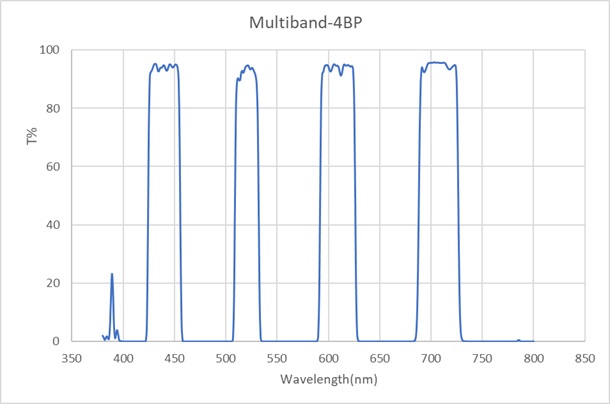
Dielectric thin-film bandpass filters can also be designed by stacking long-pass and short-pass filters, and are mostly used in the design and manufacture of broadband bandpass filters. Additionally, absorptive bandpass filters use the intrinsic absorption of materials (such as colored glass or metal-doped oxides) to selectively absorb specific wavelengths, allowing only the target wavelength band to pass through.
Fluorescence spectral analysis in the field of biomedical science: fluorescence microscope, flow cytometer, PCR, microplate reader; separate excitation light and fluorescence emission light to improve the signal-to-noise ratio ; Raman spectroscopic analysis in the fields of chemistry, pharmaceuticals, industrial quality inspection, food, and semiconductor non-destructive testing ; Infrared spectroscopic analysis for distinguishing characteristic absorption peaks of gas sensors, etc.